
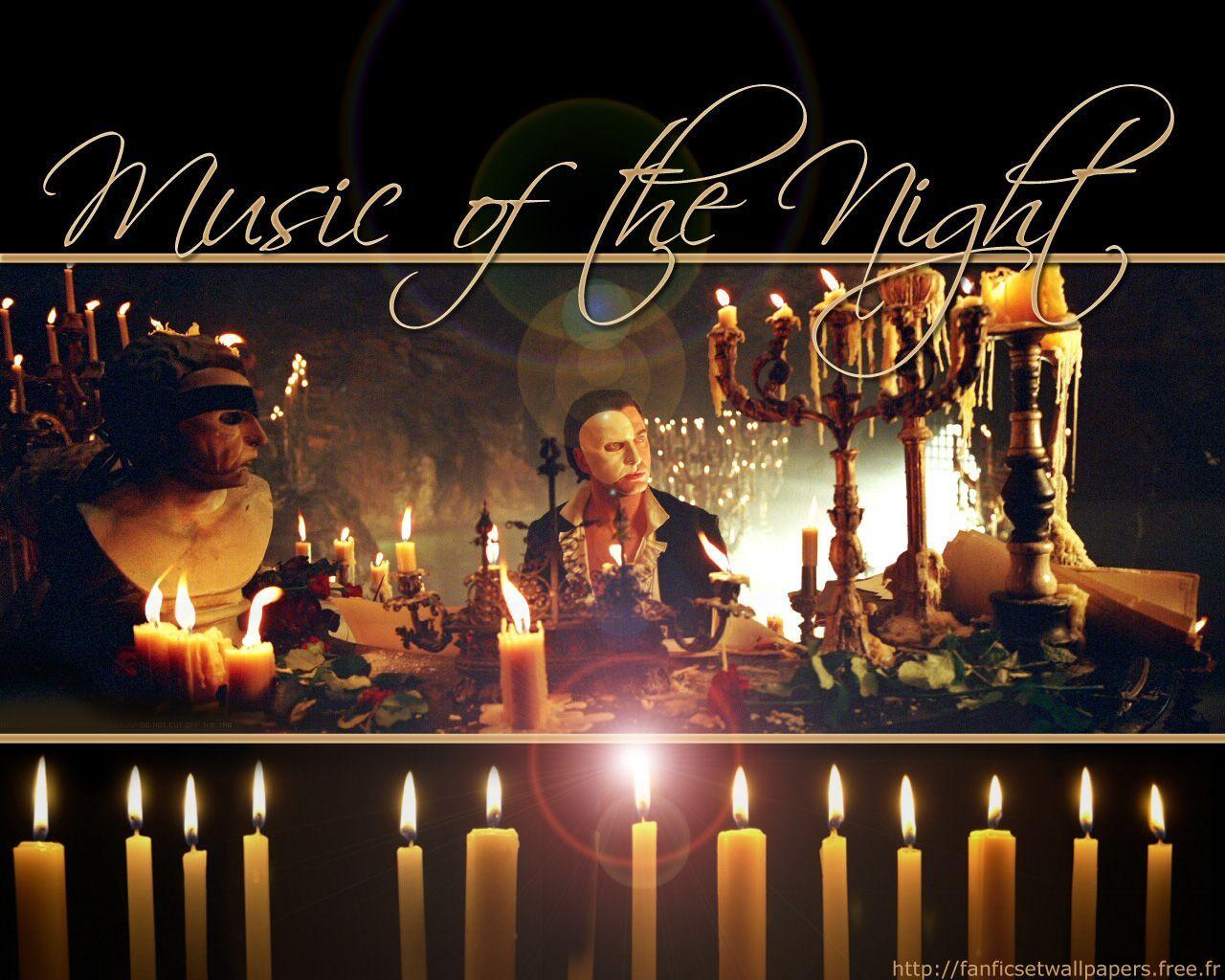
The Phantom of the Opera: 32 Behind-the-Scenes Secrets that Will Have You Singing!
The Phantom of the Opera is a 2004 musical romantic drama film directed by Joel Schumacher, produced and co-written by Andrew Lloyd Webber, and based on Webber’s 1986 stage musical, which itself was inspired by Gaston Leroux’s 1910 novel Le Fantôme de l’Opéra. The film stars Gerard Butler as the Phantom, Emmy Rossum as Christine Daaé, Patrick Wilson as Raoul, Miranda Richardson as Madame Giry, and Minnie Driver as Carlotta. Set mainly in the Paris Opera House in 1870, the story follows a mysterious masked figure who lives beneath the opera house and becomes dangerously obsessed with the young soprano Christine. The film is known for its grand sets, dramatic costumes, sweeping musical numbers, and cinematic reimagining of Andrew Lloyd Webber’s iconic score. It was shot at Pinewood Studios and used a mixture of constructed sets, miniatures, matte paintings and CGI to create its lavish Paris Opera world.
Not in the mood to read? Watch the video here.
(***may contain spoilers)
(1) The doll in the Phantom’s lair that is supposed to resemble Emmy Rossum is not actually a wax mold. It is Emmy Rossum. The production produced a mask of her face to use on the mannequin but when they put in the fake eyes it didn’t look like her. She suggested to stand in as the mannequin instead. This was done by her being made up like a doll with waxy makeup on, and her standing very, very still.

(2) The Phantom speaks only 14 of his lines and sings the rest.

(3) Hugh Jackman was considered for the Phantom, but he was unavailable because of scheduling conflicts with Van Helsing.

(4) Ramin Karimloo appears in the film as Gustave Daaé, Christine’s father. He later became strongly associated with Phantom on stage, playing both Raoul and the Phantom in major productions.

(5) The chandelier weighed 2.2 tons, cost $1.3 million, and was provided by Swarovski. It had a stunt double for riskier scenes. There was also a third chandelier made, that was equipped with electricity and lighting for the opening scene.

(6) The lit candelabras that rise from the water were not done with special effects or CGI lights: the special wicks ignited when they reached the air. This effect was done in one take and didn’t work again after that.

(7) Anne Hathaway was attached to play Christine before leaving due to a scheduling conflict with The Princess Diaries 2: Royal Engagement. Katie Holmes was also reportedly an early front-runner before Emmy Rossum was cast.

(8) Some instrumental music written for the 2004 film appears to anticipate melodies later heard in Love Never Dies. However, Love Never Dies only premiered in 2010, so it is more accurate to say Lloyd Webber later reused or developed some musical ideas rather than saying the film directly used a song from the sequel.

(9) Emmy Rossum was still a teenager when filming began. She was around 16/17 during production, while Patrick Wilson and Gerard Butler were significantly older.

(10) At the end of the Masquerade scene, Raoul briefly enters a circular chamber full of mirrors. This is a reference to the original Phantom of the Opera novel, in which the Phantom used the mirrored chamber as a torture chamber to drive victims insane.

(11) The instruction to “Keep your hand at the level of your eyes” is another reference from the book, in which the Phantom was adept at disposing of victims with the “Punjab lasso.” Keeping one’s hand at the level of one’s eyes kept the Punjab lasso away from the victim’s neck and was the only defence.

(12) To add to his deformity, Gerard Butler had a string tied just below his eye to cause it to appear more deformed when pulled down. Cast members would often tug on it as a joke between takes.

(13) Gerard Butler’s first days of filming were five weeks into production, where he and Emmy Rossum did “Past the Point of No Return” which took three days to film.

(14) Neither Gerard Butler nor Emmy Rossum had seen the musical prior to receiving their roles.

(15) John Travolta and Antonio Banderas were both considered for the role of the Phantom. Banderas actually spent several years in vocal preparation, and sang the role of the Phantom in Great Performances: Andrew Lloyd Webber: The Royal Albert Hall Celebration (1998).

(16) Andrew Lloyd Webber wrote additional music for the film adaptation, including new material used in transitions and expanded cinematic scenes.

(17) It took four hours for Gerard Butler to be fitted with full makeup and prosthetics.

(18) The Phantom’s white half-mask prop that Gerard Butler wore for the film sold for £6,450 on eBay.

(19) The theatre fire was an actual fire. Joel Schumacher wanted realism, so they destroyed the theatre for the scene.

(20) When the Phantom is taking Christine to his lair, he places her on a black horse for a while. This is not part of the show, but is a nod to the original book, where the Phantom uses a horse named Cesar to transport Christine part of the way.

(21) Michael Jackson wanted to play The Phantom himself in the film version. Jackson had a strong interest in musical theatre and was a fan of Andrew Lloyd Webber’s stage adaptation when he saw it open in New York in 1988, in which Jackson saw it several times since and talked to Lloyd Webber backstage. However, Lloyd Webber has said that although Jackson wanted to play the film version of The Phantom, Lloyd Webber felt that it was too early for “Phantom” to become a film because the stage musical had just opened at that time.

(22) The sweeping camera angles during “All I Ask of You” made it necessary to shoot multiple takes of the kiss between Emmy Rossum and Patrick Wilson. Emmy Rossumhad to ice her lips between takes to prevent them from swelling.

(23) All of the principal actors sang in the film except for Minnie Driver. Most of the actors have a background in musicals or opera, but Driver (a skilled singer) had no experience in opera and was dubbed by Margaret Preece, a singing teacher from Solihull, UK. However, Driver did contribute the film’s end title song, “Learn To Be Lonely,” written specifically for the film by Andrew Lloyd Webber.

(24) The music is played by a 105-piece orchestra.

(25) In an interview on The View (1997), Minnie Driver (Carlotta) says that to master her diva-like Italian accent, she channelled an old neighbor she had when she lived in Venice as a child.

(26) The “Why So Silent” scene is a reference to Edgar Allan Poe’s “The Masque of the Red Death.”

(27) At the beginning of the movie, the cast is rehearsing for an opera called “Hannibal” and they are singing “Hannibal Comes!” This is not an actual opera; Andrew Lloyd Webber wrote this for the beginning and wanted to help the actors warm up to the part with a laugh, hence the silly make up and costumes.

(28) In Christine’s debut performance as the star of the Opera House, she wears a costume that is an exact replica of the outfit Empress Elizabeth (aka “Sisi”) of Austria wears in her most famous portrait. This includes the white diaphanous dress with full, billowing skirt, as well as the diamond star-bursts in her hair and earrings. This is not surprising when one considers the fact that Andrew Lloyd Webber is one of the most important collectors of artwork from this period, and would be familiar with the portrait in question.

(29) Since the crew didn’t want to have to actually build an Opera House, the exterior is actually a doll house type model that was filmed in a studio. In “All I Ask of You (Reprise)”, when the Phantom is on the balcony, he is not really there. He was edited in. The footprints in the snow were made on the model where they filmed the camera zooming out and then put in the Phantom.

(30) In April 2004 an audience of the stage version of “The Phantom of the Opera” in London were asked to stay behind at the end and record the sound effects for the chandelier crash in the movie.

(31) At the end of the film, Christine’s gravestone gives her date of birth as 1854. The main story takes place in 1870, which means Christine is 16 during the events at the Opera House. Emmy Rossum, the actress who played her, was 16 when filming started.

(32) The film’s timeline differs from the stage musical. In the 2004 film, the main story takes place in 1870, the auction takes place in 1919, and Christine’s tombstone shows she died in 1917. In the stage version, the timeline is different, with the main story usually placed in the 1880s and the auction set earlier than in the film.


Share this article
